

To-sun Technology · News Trends
Invite you to witness every step of development and growth
Premium Case | University Constant Temperature and Humidity Laboratory Renovation Project
Release time:
2025-09-09 16:43
At the same time, with the expansion of the college's enrollment scale and the increase of research teams, the original office space can no longer accommodate the growing experimental teaching and research tasks. Disorganized equipment placement. 、 Crowded experimental space. Overcrowding and other issues. These problems have gradually become prominent, not only reducing experimental efficiency but also posing certain safety hazards. Moreover, driven by the "Double First-Class" initiative, universities have set higher requirements for the quality and transformation efficiency of scientific research achievements. Outdated laboratory hardware facilities have become a "bottleneck" restricting breakthroughs in areas such as clothing material research and fashion design innovation. This time, Nanjing Expansion Technology The renovation of the constant temperature and humidity laboratory at a university's School of Fashion and Art Design has become an inevitable choice to enhance the school's research strength and ensure teaching quality.

The original site of this constant temperature and humidity laboratory was limited by the original building's functional positioning, lacking a professional temperature and humidity control system, as well as airflow organization, power distribution, and network configuration that meet scientific research standards. It completely fails to meet the requirements of related experiments. For example, during fabric performance testing (such as breathability, color fastness, tensile strength), slight fluctuations in temperature and humidity directly affect the accuracy of experimental data; when debugging smart clothing sensor components, unstable power supply and network environment can cause experiment interruptions or even damage precision instruments.
01 Project Content and Plan: Precise Measures to Overcome Technical Difficulties
(1) Basic Project Overview
This renovation project targets the original office area on the first floor. The total renovation area is 85 square meters. The building has five floors in total, with the renovation site on the first floor. The original building floor height is 4.2 meters, beam clearance height is 3.8 meters, and the finished ceiling height after renovation is 2.6 meters, ensuring both spatial openness and sufficient space for equipment installation.
(2) Core Renovation Content
1. Decoration Engineering: Reconstructing the Basic Space Considering the original site was an office, basic demolition work was required first (furniture removal was done by the owner; Nanjing Expansion Technology was responsible for removing wall-mounted units, individual room ceilings, and old wiring). On this basis, three core decoration renovations were carried out: first, floor demolition and reconstruction, laying floor materials that meet laboratory load-bearing and anti-static requirements, and laying the foundation for subsequent raised floor installation; second, adding partition walls to divide different areas according to experimental functions, improving space utilization; third, re-planning the ceiling, designing it in conjunction with HVAC supply and return air outlets, and creating openings in load-bearing walls for installing supply and return air outlets and new doorways, ensuring reasonable airflow organization and personnel passage.

2. HVAC Engineering: Creating a Stable Temperature and Humidity Environment Constant temperature and humidity are the core functions of the laboratory. Therefore, the project is equipped with a professional precision air conditioning system to achieve temperature 20±1℃, humidity 65±2% RH. The air conditioning unit parameters were precisely calculated, with an air volume not less than 3400 CMH, cooling capacity ≥13.6 KW, humidification capacity ≥8 KG/h, electric heating capacity ≥12 KW, and support for timed on/off functions, meeting 24-hour uninterrupted experimental needs while considering energy consumption control. For airflow organization, the "top supply, bottom return" mode is adopted—air is supplied through the ceiling and returned via the raised floor, allowing air to distribute evenly indoors, effectively avoiding local temperature and humidity inconsistencies, while ensuring work surface wind speed <0.25 m/s, providing a stable environment for experiment personnel and precision instruments.
3. Electrical Engineering: Ensuring Efficient Experimental Operation To support the operation of various experimental equipment, the project constructed a comprehensive electrical system: first, sufficient power distribution to meet the electricity needs of air conditioning units, experimental instruments, and other high-power equipment; second, reasonable layout of lighting and sockets to ensure adequate lighting in the experimental area and that the number and location of sockets can accommodate different equipment placements; third, reserving 8 network ports, providing stable network support for real-time experimental data transmission and equipment network debugging, meeting the needs of current intelligent scientific research.
02 Key Difficulties Overcome
During project implementation, multiple stringent technical indicators had to be met. Nanjing Expansion Technology overcame difficulties one by one through precise design and meticulous construction:
Environmental Stability: By selecting high-precision sensors and intelligent control systems to monitor temperature and humidity in real time, linked with air conditioning units for dynamic adjustment, ensuring temperature fluctuations do not exceed ±1℃ and humidity fluctuations do not exceed ±2% RH;
Equipment Performance Matching: Strictly purchasing air conditioning units according to parameter requirements, conducting simulation tests in advance to ensure air volume, cooling capacity, humidification capacity, and other indicators fully meet standards, and implementing timed on/off programs for energy-efficient use;
Noise Control: Installing vibration damping devices during air conditioning unit installation, using silencing designs for supply and return air outlets, ultimately achieving indoor noise ≤60 dB when a single air conditioning unit is running, meeting laboratory noise standards;
Airflow and Pressure Control: Through the "top supply, bottom return" and raised floor design, combined with damper adjustments, ensuring air exchange rate ≥30 times/hour, fresh air supply not less than 10% of total circulation air volume (and ≥0.5 m³/min per person), while maintaining indoor positive pressure of 5–10 Pa, effectively preventing external pollutants from entering;
Environmental Compliance: Select environmentally friendly decorative materials and equipment, and entrust professional institutions to conduct inspections after construction to ensure that indoor air quality meets national environmental protection standards, safeguarding the health of laboratory personnel.
03 Trends in the Transformation of University Laboratories: From "Functional Satisfaction" to "Intelligent Efficiency"
The renovation project of the constant temperature and humidity laboratory at the School of Fashion and Art Design of a certain university is a microcosm of the current transformation of university laboratories. From the perspective of industry development, university laboratories are gradually showing three major trends:
First, the trend of "discipline customization." In the past, laboratories mostly adopted "general-purpose" designs, which were difficult to adapt to the special needs of different disciplines. Nowadays, laboratory renovations emphasize "customization according to needs"—for example, chemistry laboratories focus on corrosion resistance, explosion prevention, and exhaust gas treatment; biology laboratories focus on sterile environments and biosafety; while laboratories in fields like fashion and art design at certain universities center on constant temperature and humidity and stable airflow. In the future, "composite" customized laboratories for interdisciplinary fields will become mainstream.
Second, the trend of "integration of intelligence and digitization." Traditional laboratories rely on manual operations and records, resulting in low efficiency. In the future, laboratories will widely apply Internet of Things, big data, and artificial intelligence technologies: sensors will collect real-time data on temperature, humidity, pressure, energy consumption, etc., uploading it to cloud platforms for analysis, enabling remote monitoring and intelligent adjustment of equipment; with the help of digital management systems, the entire process of experimental samples, instrument usage, and data recording will be traceable, greatly improving research efficiency and management levels.
Third, the trend of "green low-carbon and safety priority." Driven by the "dual carbon" goals, university laboratories will pay more attention to energy saving and consumption reduction, such as selecting variable frequency air conditioners, LED energy-saving lighting, and adopting heat recovery technologies to reduce energy waste; at the same time, safety protection standards will be further improved. In addition to conventional fire protection and explosion-proof facilities, intelligent early warning systems will be introduced to provide real-time alerts for risks such as gas leaks and equipment failures, building a "full-process, no blind spots" safety protection system.
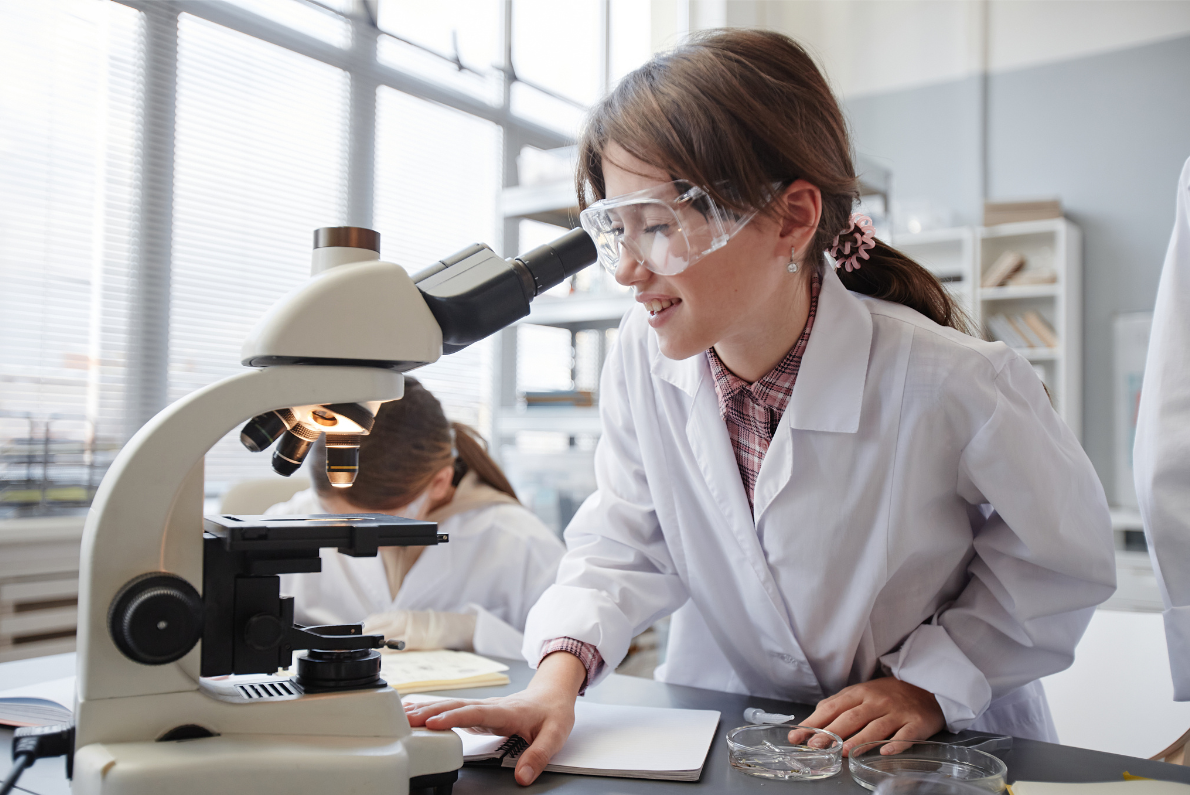
The constant temperature and humidity laboratory built by Nanjing Expansion Technology for a certain university not only addresses the urgent needs of the college's scientific research and teaching but also aligns with the direction of university laboratory transformation. In the future, as universities increasingly emphasize scientific research innovation, laboratories will no longer be merely "experimental venues" but comprehensive platforms integrating "scientific research innovation, talent cultivation, and achievement transformation," providing solid hardware support for the high-quality development of higher education.

Previous Page
Related News

Committed to becoming a leader in the field of laboratory construction in China

WeChat Public Number
Nanjing To-Sun Technology Co.,Ltd
sale@to-sun.com
Address: 6th Floor, Anke Building, 31 Guangju Road, jianye district, Nanjing