

To-sun Technology · News Trends
Invite you to witness every step of development and growth
Cleanroom Construction: Nanjing Expands from Technical Standards to Practical Implementation, Creating a High-Level Clean Environment
Release time:
2025-09-16 09:05
In high-end fields such as biomedicine, electronic information, food testing, and precision medicine, clean laboratories have become the core infrastructure to ensure experimental accuracy, product quality, and personnel safety. Unlike ordinary laboratories, clean laboratories control pollutants such as particles, microorganisms, and harmful gases in indoor air to extremely low levels through systematic air purification, airflow control, pressure regulation, and contamination prevention design, providing a stable and controllable clean environment for various high-sensitivity experiments and production activities. As a service provider focused on comprehensive laboratory solutions, Nanjing Expansion Technology has summarized the full-process technical key points from planning to implementation of clean laboratories based on experience from thousands of clean laboratory construction projects, helping industry practitioners accurately grasp the core of construction.
1. Core Technical Standards for Clean Laboratory Construction: Classification and Indicator Control
The construction of clean laboratories is not "one-size-fits-all" but must follow strict classification standards based on the pollutant control requirements of the experimental scenarios. Currently, the commonly used domestic standards "GB 50457-2019 Pharmaceutical Industry Clean Plant Design Standard" and "GB/T 25915.1-2021 Cleanrooms and Associated Controlled Environments Part 1: Air Cleanliness Classes" divide the air cleanliness of clean laboratories into 9 levels (ISO 1-9), among which ISO Class 5 (Class 100), ISO Class 6 (Class 1,000), and ISO Class 7 (Class 10,000) are the most widely applied in the industry.
Taking the clean laboratories in the biomedicine field as an example, sterile formulation research laboratories need to achieve ISO Class 5 cleanliness, requiring the number of particles ≥0.5μm per cubic meter of air to be ≤3520 and microbial colony count ≤1; while pharmaceutical physical and chemical testing laboratories usually adopt ISO Class 7 clean standards, with particle control indicators of ≤352,000 particles ≥0.5μm per cubic meter and microbial colony count ≤10. In addition, technical indicators of clean laboratories also include temperature and humidity control (usually temperature 20-26°C, relative humidity 45%-65%), pressure difference gradient (pressure difference between adjacent clean areas ≥5Pa, between clean and non-clean areas ≥10Pa), airflow organization efficiency (air changes per hour ISO Class 5 ≥240 times/hour, ISO Class 7 ≥30 times/hour), etc. These indicators need to be monitored and regulated in real-time by professional equipment to ensure the stable compliance of the clean laboratory environment.
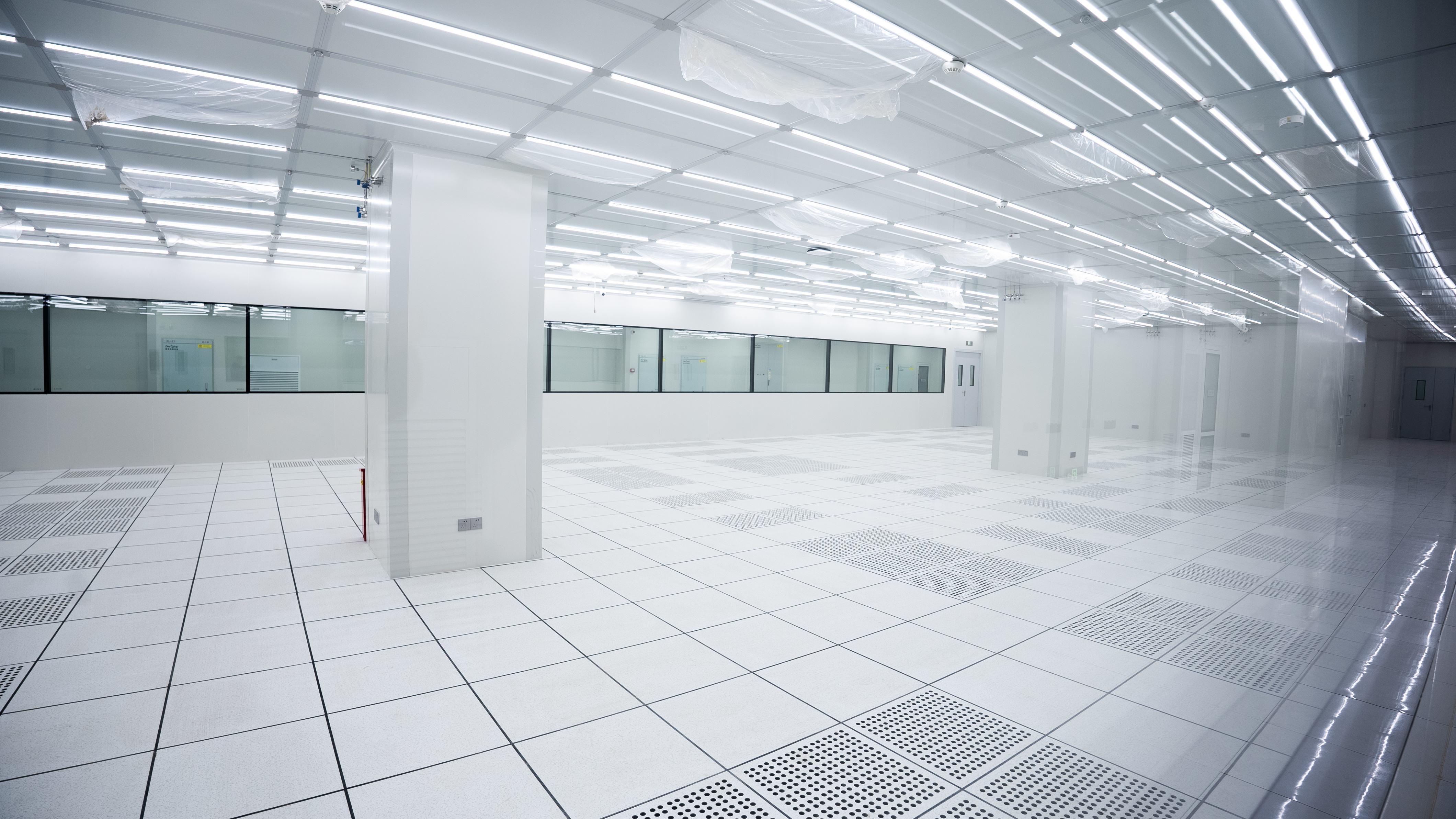
2. Core System Design for Clean Laboratory Construction: Full-Chain Protection from "Purification" to "Prevention and Control"
1. Air Purification System: The "Heart and Lungs" of the Clean Laboratory
The air purification system is the core for controlling pollutants in clean laboratories. Its process is: outdoor air → primary filter (removes particles ≥5μm) → medium filter (removes particles ≥1μm) → fan section (pressurized air supply) → surface cooler/heater (temperature and humidity adjustment) → humidifier/dehumidifier (humidity control) → high-efficiency particulate air filter (HEPA, removes particles ≥0.3μm, filtration efficiency ≥99.97%) → cleanroom air supply. For high-grade clean laboratories (such as ISO Class 5), an ultra-low penetration air filter (ULPA, filtration efficiency ≥99.999%) is added after the high-efficiency filter, and airflow organization methods such as "top supply with side return" or "top supply with bottom return" are adopted to ensure uniform coverage of clean airflow over the experimental area, avoiding pollutant accumulation caused by airflow dead zones.
In addition, the air purification system of clean laboratories must be equipped with variable frequency fans and pressure difference control systems. When changes in personnel or equipment inside the laboratory cause resistance changes, the system can automatically adjust the air volume to maintain a stable pressure difference gradient and prevent backflow of air from non-clean areas. This is a key defense line to ensure the cleanliness of the clean laboratory.
2. Enclosure Structure and Materials: The "Barrier" of the Clean Laboratory
The enclosure structure of clean laboratories must have airtightness, corrosion resistance, and ease of cleaning. Common materials include:
- Walls and ceilings: use 50mm thick color steel panels (rock wool or glass magnesium core), surface coated with epoxy resin, with rounded joint transitions to avoid dust accumulation and microbial growth;
- Floors: use PVC sheet or epoxy resin self-leveling floors, acid and alkali resistant, wear-resistant, with smooth surfaces without cracks, able to withstand frequent cleaning and disinfection;
- Doors and windows: use stainless steel frame double-layer insulated tempered glass windows (inner layer is anti-fog glass), doors are electric sliding doors equipped with door closers and sealing strips to ensure complete airtightness when closed.
The choice of these materials not only affects the airtightness of the clean laboratory but also directly relates to the convenience and cost of later cleaning and maintenance. It must be comprehensively considered according to factors such as chemical corrosion, high temperature, and disinfection frequency in the experimental scenarios.
3. Process Layout and Functional Zoning: The "Skeleton" of the Clean Laboratory
The layout of clean laboratories must follow the principle of "separation of personnel flow, material flow, and airflow" to avoid cross-contamination. Typical functional zones include:
- Clean area: core experimental areas (such as sterile operation rooms, sample preparation rooms) that must meet specified cleanliness levels;
- Auxiliary clean area: buffer rooms, changing rooms, handwashing and disinfection rooms, serving as transitions between clean and non-clean areas. Personnel must complete changing clothes, handwashing, and air showers (to remove surface particles) here before entering the clean area;
- Non-clean area: offices, reagent storage rooms, equipment rooms, isolated from clean areas by pressure difference.
Taking the clean laboratory in the electronics industry (chip packaging and testing) as an example, the layout must strictly follow the process of "raw material entry → testing → packaging → finished product output," setting up unidirectional logistics channels to avoid contamination risks caused by material back-and-forth movement. Meanwhile, equipment inside the laboratory (such as lithography machines, testing instruments) must be placed away from return air outlets to prevent equipment heat dissipation from affecting airflow stability, ensuring that environmental parameters in every area of the clean laboratory meet process requirements.
3. Industry Customized Solutions for Clean Laboratory Construction: Adapting to Core Needs of Different Fields
Different industries have significant differences in clean laboratory requirements. Nanjing Expansion Technology, through a "standard + customization" model in project practice, creates adaptive solutions for clients in various fields:
1. Biomedicine field: focusing on "sterility" and "compliance"
Biopharmaceutical clean laboratories must comply with GMP (Good Manufacturing Practice) requirements, focusing on sterile environment control and traceability. For example, the sterile operation room (ISO Class 5) in a vaccine research laboratory must adopt a "fully enclosed negative pressure design," equipped with a Class II biosafety cabinet and isolator to ensure no microbial leakage during experiments; meanwhile, the clean laboratory must install online monitoring systems (such as airborne microbial samplers and particle counters) to record temperature, humidity, pressure differentials, and cleanliness data in real time, with automatic data storage and traceability to meet regulatory audit requirements.
2. Electronics and Information Field: Focus on "micro-dust" and "anti-static"
Clean laboratories in the electronics industry (such as semiconductor chip manufacturing) require extremely high particle control (usually ISO Class 5 or above) and must have anti-static functions. To this end, the laboratory floor must be covered with anti-static PVC rolls, walls and equipment shells grounded, and personnel must wear anti-static clothing and shoe covers; meanwhile, the air purification system must remove metal ions and organic pollutants from the air to prevent particles and static electricity from causing chip short circuits or performance failures, ensuring product yield.
3. Food Testing Field: Focus on "cross-contamination prevention"
Food testing clean laboratories must strictly separate the "physicochemical testing area" and the "microbiological testing area" to avoid sample cross-contamination. The microbiological testing area (ISO Class 7) must use an independent air purification system, with airflow direction from "physicochemical area → buffer room → microbiological area" to prevent microbial spread; workbenches are made of stainless steel and equipped with UV sterilization lamps and biosafety cabinets to ensure accurate and reliable test results.

4. Common Misconceptions and Avoidance Strategies in Clean Laboratory Construction
During clean laboratory construction, some companies fall into pitfalls due to insufficient understanding of technical standards, resulting in high operational costs and substandard cleanliness later. Common misconceptions include:
- Blindly pursuing high cleanliness levels: not selecting levels based on experimental needs, such as using ISO Class 5 for ordinary food physicochemical testing, causing fan energy consumption to increase by over 30%;
- Ignoring airflow organization design: equipment placement blocking air supply outlets, creating airflow dead zones and causing local cleanliness to fail standards;
- Improper material selection: using ordinary color steel plates in chemical testing clean laboratories, leading to wall corrosion and sealing failure.
The key to avoiding these misconceptions lies in "precise early-stage planning": Nanjing Expansion Technology conducts on-site surveys, needs analysis, and simulation calculations (such as CFD airflow simulation) at the project initiation stage to determine the clean laboratory's class, layout, and system parameters; meanwhile, during construction, "full-process quality control" is implemented to inspect the sealing of enclosure structures, filter installation accuracy, and system operating parameters one by one, ensuring the clean laboratory passes acceptance on the first try and reducing later rectification costs.
5. Building "Stable, Efficient, and Compliant" Clean Laboratories with Professional Technology
Constructing clean laboratories is a systematic project involving multidisciplinary technologies such as aerodynamics, materials science, and microbiology. Its core goal is to provide a "stable, efficient, and compliant" clean environment for experimental and production activities. Nanjing Expansion Technology As a comprehensive laboratory solution provider, with over 20 years of experience in clean laboratory construction, it has supported more than 500 companies in biopharmaceuticals, electronics, food testing, and other industries with full-chain services from planning and design to construction and operation, helping clients achieve both experimental precision and production efficiency under stringent industry standards.
In the future, with technological iterations, clean laboratories will develop towards "intelligence" and "energy-saving," such as realizing remote monitoring and automatic adjustment of environmental parameters through IoT technology and adopting heat recovery systems to reduce energy consumption. Nanjing Expansion Technology will continue to deepen research and development in clean laboratory technology, providing the industry with more innovative and cost-effective solutions, promoting the advancement of high-end laboratory construction standards.
Related News

Committed to becoming a leader in the field of laboratory construction in China

WeChat Public Number
Nanjing To-Sun Technology Co.,Ltd
sale@to-sun.com
Address: 6th Floor, Anke Building, 31 Guangju Road, jianye district, Nanjing