

To-sun Technology · News Trends
Invite you to witness every step of development and growth
Overall Laboratory Construction: Nanjing Expansion Technology's Full-Cycle EPC Solution
Release time:
2025-09-18 10:20
In this era of rapid advancement in scientific research and industry, laboratories have long ceased to be mere combinations of "simple workbenches plus cabinets"—instead, they have evolved into comprehensive spaces that integrate "functional adaptability, safety protection, intelligent efficiency, and eco-friendliness." From sample development in biomedicine and materials science to performance testing of new materials and data analysis for environmental monitoring, the diverse needs across various fields are driving the overall laboratory construction trend to become the industry standard. As an integrated service model encompassing "planning & design, equipment procurement, engineering construction, acceptance & delivery, and operation & maintenance support," the EPC engineering approach for complete laboratories effectively addresses common challenges in traditional phased construction—such as the disconnect between design and execution, and mismatches between equipment and specific lab scenarios—thereby making laboratory projects not only more efficient but also better aligned with real-world requirements. Nanjing Expansion Division Skill Leveraging 26 years of laboratory construction experience and driven by cutting-edge expertise, we provide customized, end-to-end EPC engineering services tailored to meet the unique needs of businesses across industries, helping laboratories achieve the goal of "ready-to-use upon completion, delivering maximum efficiency from day one."
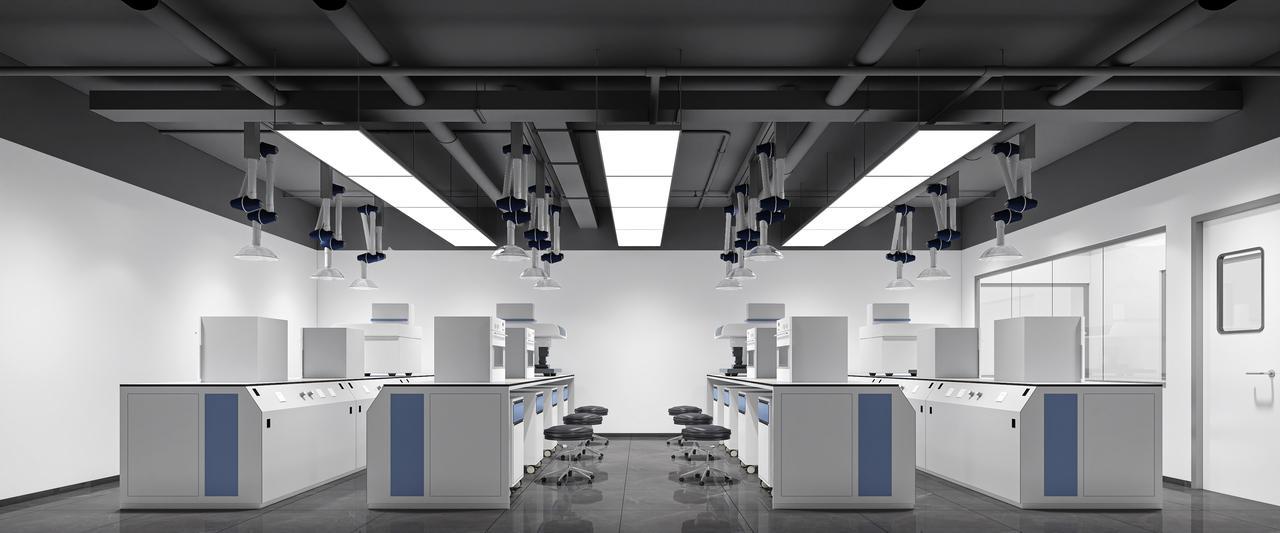
I. First, Understand the Whole Lab: Here’s What You Need to Know About This Science Popularization Knowledge
1. What is a holistic laboratory? How is it different from a traditional laboratory?
The integrated laboratory is a systematic space designed around the principles of "smooth experimental workflows, robust safety measures, and easy post-maintenance." It not only includes essential equipment such as workbenches and fume hoods but also features supporting infrastructure like utility pipelines, ventilation systems, cleanroom units, and exhaust-gas treatment facilities—emphasizing "holistic, all-factor collaboration."
Traditional laboratory construction typically follows a "phased approach"—first handling civil engineering, then selecting equipment, and finally integrating the systems. This approach often leads to issues such as "mismatch between lab bench dimensions and available space" or "ventilation systems failing to meet equipment requirements," resulting in high retrofitting costs and low efficiency later on. In contrast, an integrated EPC (Engineering, Procurement, Construction) project for the entire lab coordinates every stage from the very beginning, ensuring seamless coordination among "design, procurement, and construction" to prevent costly rework and waste.
2. The core components of the entire laboratory: These parts are all indispensable.
Whether it's a chemistry analysis lab or a microbiology lab, the core structure of any laboratory invariably revolves around these four key modules:
- Functional Area Layout: Divide areas according to the experimental workflow—such as the "Sample Pre-processing Zone, Instrument Analysis Zone, Reagent Storage Zone, and Waste Disposal Zone"—to ensure smooth operations. For example, the "Reagent Storage Zone" should be located close to the workbench to minimize unnecessary movement by personnel.
- Basic equipment system: Includes laboratory benches (choose steel-wood or all-steel materials as needed), fume hoods (to control the spread of harmful gases), and storage cabinets (for categorized storage of reagents and consumables)—these form the lab's "basic framework."
- Supporting systems include: electrical and plumbing lines (to meet the power supply needs of instruments and experimental water requirements), a ventilation system (to maintain indoor air circulation), and a temperature and humidity control system (to ensure the stable operation of precision instruments), among others.
- Safety protection systems include emergency shower units (for chemical burns), explosion-proof lighting fixtures (suitable for flammable and explosive environments), and exhaust gas treatment equipment (to minimize pollutant emissions)—all working together to ensure experimental safety.
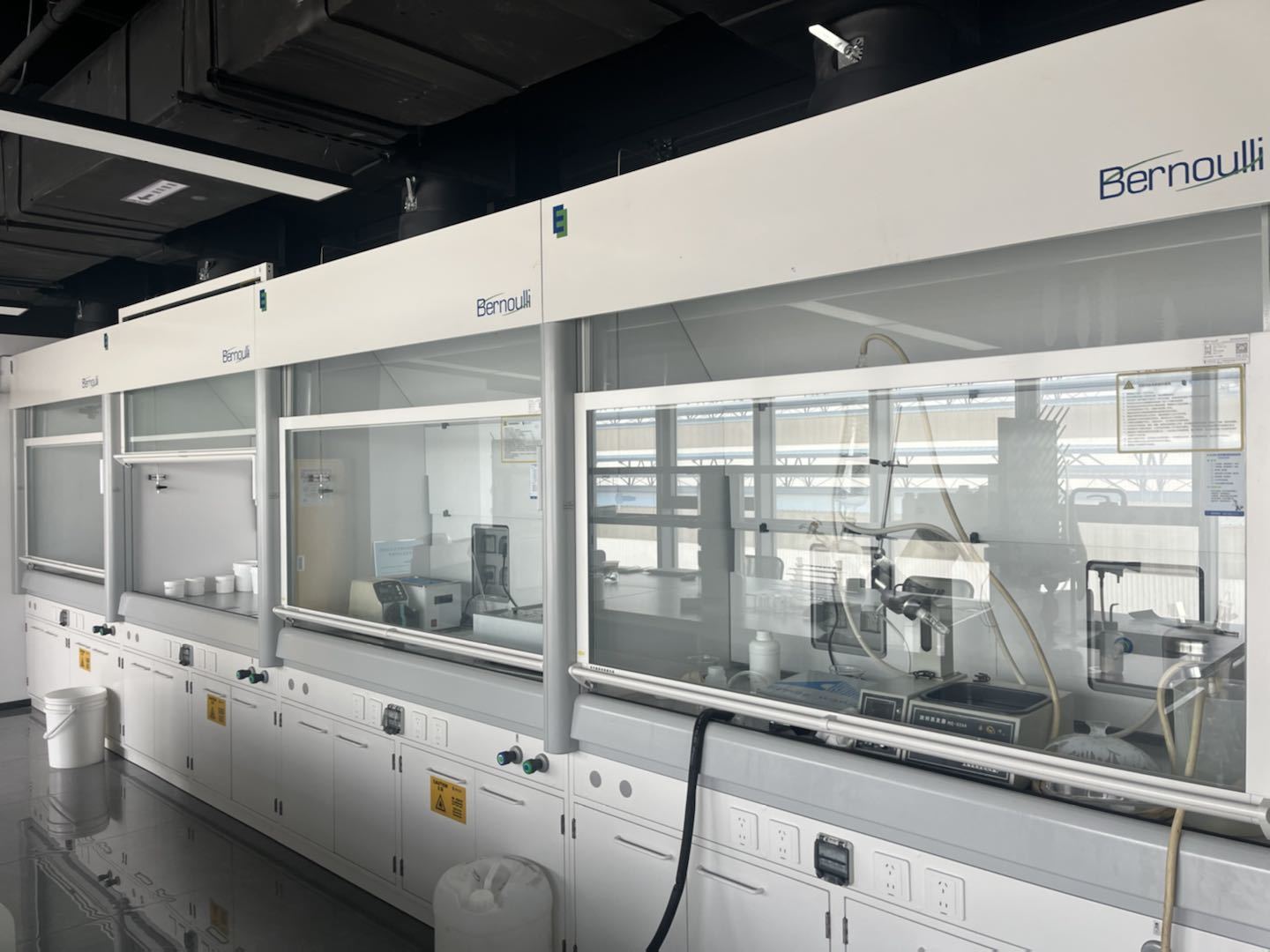
II. Comprehensive Laboratory EPC Project: Nanjing Expansion Technology's Tailored Implementation Plan
1. Customized Design: Enabling the lab to “fit your needs without waste”
Nanjing Expansion Technology, during the overall laboratory EPC engineering design phase, first thoroughly understands the client’s experiment type, equipment specifications, and staff size, before proceeding with tailored planning.
- If the customer is a chemical analysis laboratory, they will focus on optimizing the ventilation system by selecting "variable-air-volume fume hoods," which can adjust airflow rates according to experimental needs—balancing energy efficiency with effective toxicity control.
- If the customer is a microbiology laboratory, a "clean unit" will be added, utilizing air filtration and negative pressure control to prevent cross-contamination of experimental samples.
- If the customer is a physicochemical testing laboratory, sufficient "instrument power interfaces" will be reserved to accommodate high-power equipment such as atomic absorption spectrometers and liquid chromatographs, preventing the need for later installation of additional pipelines.
2. Intelligent Procurement: Choosing the Right Equipment to "Avoid Pitfalls"
Whether the equipment in the overall laboratory is well-chosen directly affects the later user experience. Nanjing Expansion Technology has a rigorous "Selection Criteria" system in place during the procurement phase of the overall laboratory EPC project:
- Basic equipment should prioritize products that are "durable and easy to maintain," such as laboratory benches made from "all-steel material," which offers excellent corrosion resistance, strong load-bearing capacity, and a service life of over 10 years.
- Choose equipment with the "intelligent interconnection" feature for the supporting system—such as fume hoods connected to the central control system. When the cabinet door height changes, the airflow speed adjusts automatically, eliminating the need for manual operation.
- The proportion of green equipment should be no less than 80%, such as opting for "energy-efficient air conditioners," which consume 30% less electricity than conventional models, perfectly meeting the lab's long-term usage requirements.
3. Precision Construction: Ensuring the Lab Meets Standards "Right from the Start"
Construction is a critical phase in the successful implementation of the entire laboratory. Nanjing Expansion Technology, during the EPC construction stage of the integrated laboratory project, is implementing "full-process control":
- With our own construction team, we can better coordinate and manage the project. Before construction begins, our technical staff will undergo "specialized training" to clearly define the construction requirements for different areas.
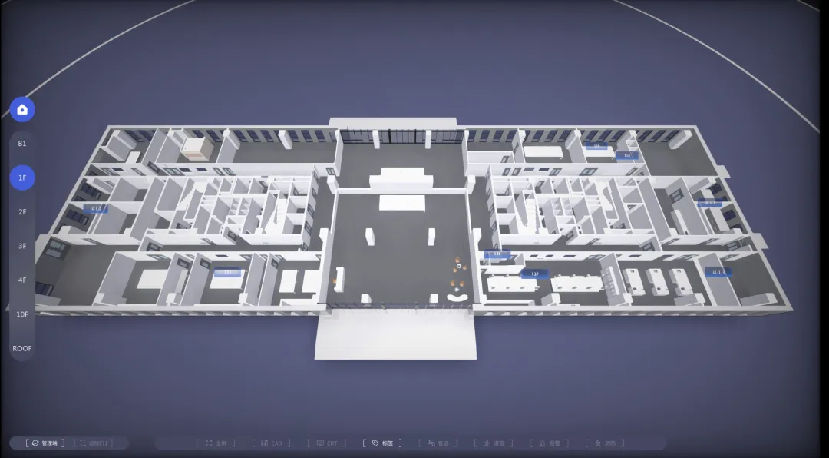
- During construction, "visual management" is implemented using BIM technology, allowing real-time visualization of pipeline layouts and equipment installation locations through 3D models, ensuring that "plumbing and electrical pipelines do not conflict" and that "equipment is installed with precision."
- After construction, a "full-scale inspection" will be conducted jointly with a third-party organization, verifying each aspect—from "ventilation efficiency" and "temperature-humidity stability" to the "response time of the emergency sprinkler system"—to ensure that the laboratory can "immediately meet experimental needs" once it’s operational.
III. Choose Nanjing Expansion Technology: 3 Major Advantages of Comprehensive Laboratory Construction
- Extensive Experience: With 26 years of dedicated focus on comprehensive laboratory construction, we've served over 200 enterprises spanning research universities, chip and semiconductor industries, biopharmaceuticals, new materials, new energy, and testing & inspection sectors. We have a deep understanding of the unique challenges and pain points in laboratories across various fields, enabling us to swiftly deliver tailored solutions.
- Comprehensive Services: Our full-suite Laboratory EPC services cover the entire lifecycle—from design to operations and maintenance. We not only handle construction but also provide post-completion equipment maintenance and staff training, such as scheduling regular on-site inspections of ventilation systems and educating lab personnel on the proper use of emergency protective equipment.
- High cost-effectiveness: By leveraging "centralized procurement + efficient construction," we reduce costs, resulting in savings of 15%-20% compared to traditional phased construction methods—while also shortening the project timeline, enabling the lab to become operational faster.
In the future, Nanjing Tuozhan Technology will continue to optimize its comprehensive laboratory EPC engineering services, delivering more professional solutions and meticulous support to help more enterprises build laboratories that are "user-friendly, safe, and worry-free," thereby accelerating scientific research and industrial innovation.
Related News

Committed to becoming a leader in the field of laboratory construction in China

WeChat Public Number
Nanjing To-Sun Technology Co.,Ltd
sale@to-sun.com
Address: 6th Floor, Anke Building, 31 Guangju Road, jianye district, Nanjing